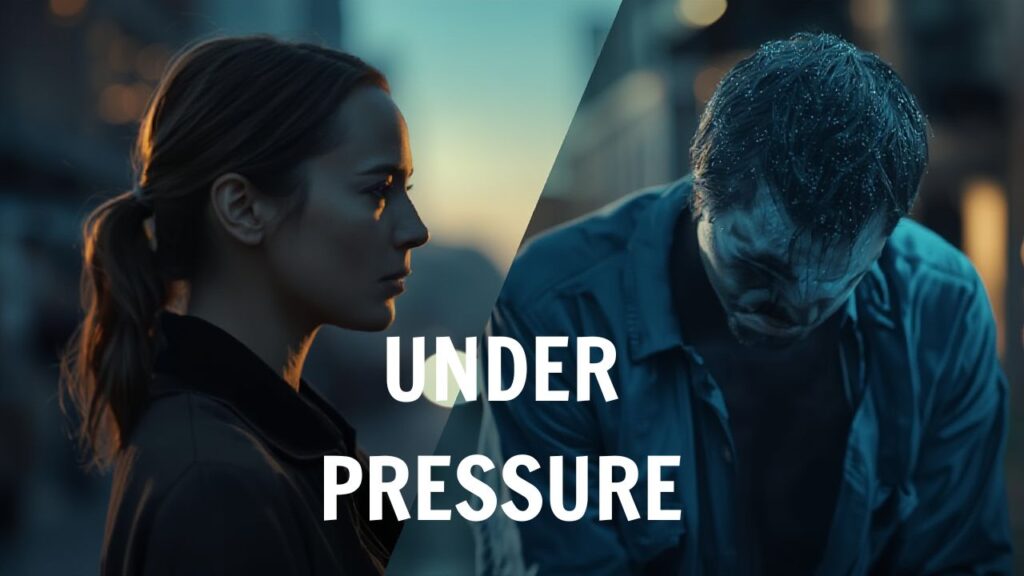
Understanding why some people thrive under pressure while others don’t can change how you work, how you lead, and how you respond to stress in your own life. Put two individuals in the same high-stakes situation—an exam, a deadline, a difficult conversation, a crisis—and you may see completely different outcomes. One sharpens, focuses, and performs at their best. The other freezes, spirals, or falls apart in ways that surprise even them.
This difference isn’t about intelligence, talent, or even experience alone. It’s about how the brain interprets pressure—and what happens next.
Thrive Under Pressure
We often think pressure itself is the enemy. In reality, pressure is neutral. It’s information. Pressure signals that something matters, that the outcome has significance, that attention is required. The real difference lies in how the nervous system interprets that signal.
When pressure appears, the brain asks a simple question—often unconsciously:
Is this a challenge I can meet, or a threat I must survive?
That split-second interpretation determines everything that follows.
The Challenge vs Threat Response
Psychologists sometimes describe pressure responses as falling into two categories: challenge states and threat states.
When someone enters a challenge state, their body still experiences stress—but it’s a productive stress. Heart rate increases, focus narrows, reaction time sharpens. Blood flow supports cognitive performance rather than panic. The individual feels alert, capable, and engaged.
In a threat state, the same pressure triggers a very different cascade. Cortisol floods the system. Thinking becomes rigid. Mistakes feel catastrophic. Attention turns inward rather than outward. The person becomes more concerned with avoiding failure than pursuing success.
Both responses are automatic—but they are not fixed traits.
Why Some People Tip Toward Challenge
People who thrive under pressure tend to share a few psychological patterns, even if they don’t realise it.
First, they have a different relationship with stress itself. Instead of seeing stress as a sign that something is wrong, they see it as evidence that something matters. This subtle reframe changes the body’s response. Research shows that interpreting stress as helpful rather than harmful leads to better performance and recovery.
Second, they possess a sense of internal control. This doesn’t mean they control outcomes—only that they believe their actions influence results. Even when circumstances are difficult, they focus on what they can do next rather than what might go wrong.
Third, they are more comfortable with temporary discomfort. Pressure brings uncertainty, effort, and emotional strain. People who thrive don’t enjoy these sensations—but they don’t interpret them as danger. They allow discomfort to exist without panicking about it.
Why Pressure Breaks Others
On the other side, people who struggle under pressure aren’t weak or incapable. Often, they’ve simply learned to associate pressure with threat.
This can come from past experiences—harsh criticism, public failure, unpredictable authority figures, or environments where mistakes were punished rather than corrected. Over time, pressure becomes linked to shame, rejection, or loss of safety.
When pressure appears, the brain doesn’t evaluate the present moment objectively. It reacts based on stored emotional memory. The body prepares not to perform—but to protect.
This explains why someone can be highly competent in calm situations yet fall apart when stakes rise. Their nervous system isn’t responding to the task—it’s responding to the meaning attached to it.
The Role of Identity
One of the most overlooked factors in pressure resilience is identity.
When someone ties their self-worth tightly to performance, pressure becomes dangerous. A mistake isn’t just an error—it’s a verdict on who they are. This turns every challenge into a potential identity threat.
People who thrive under pressure tend to separate who they are from how they perform. They still care deeply about results, but failure doesn’t collapse their sense of self. That psychological separation gives them room to adapt, recover, and think clearly.
Ironically, caring less about what failure says about you often leads to better outcomes.
Pressure Amplifies Habits
Pressure doesn’t create new behaviours—it amplifies existing ones. Under stress, the brain defaults to whatever patterns are most familiar. If someone has practised preparation, reflection, and emotional regulation, those skills surface when pressure rises. If someone relies on avoidance, self-criticism, or panic, those habits come to the fore instead.
This is why pressure often feels unfair. It exposes systems we didn’t realise we were running. The good news is that habits can be changed long before pressure arrives.
Can You Learn to Thrive Under Pressure?
Yes—but not by trying to “toughen up” or suppress anxiety.
Thriving under pressure starts with changing interpretation, not eliminating stress. When you notice pressure, the question isn’t “How do I get rid of this feeling?” but “What does this feeling allow me to do?”
It also involves gradual exposure. Confidence under pressure is built the same way physical strength is built—through progressive load. Small challenges, repeated often, teach the nervous system that pressure is survivable and even useful.
Finally, it requires self-compassion paired with accountability. Beating yourself up for struggling under pressure only reinforces threat responses. Taking responsibility while allowing imperfection creates learning rather than fear.
Pressure Is a Skill, Not a Personality Trait
The biggest myth about pressure is that some people are simply “built for it” and others aren’t. In reality, pressure tolerance is a skill shaped by mindset, experience, and nervous system conditioning. It can be trained, refined, and recovered—even later in life.
The goal isn’t to become fearless. The goal is to remain functional when fear shows up. Pressure will always exist. What changes is whether it sharpens you—or overwhelms you.
And that difference is more within your control than you might think.