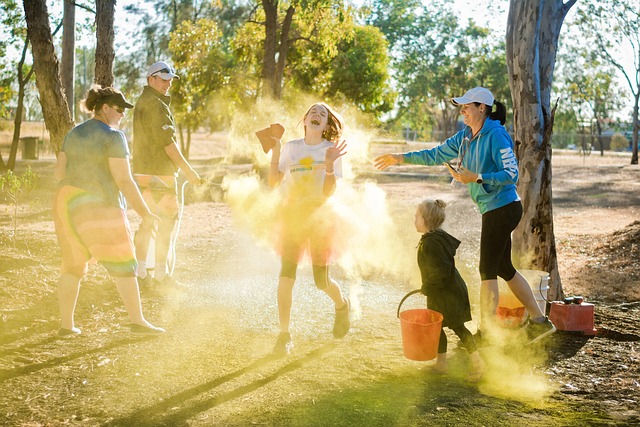
We all know the feeling. Laughter bubbling up until your sides ache. Losing track of time while doing something utterly pointless yet deeply satisfying.
That delicious sense of lightness that comes when, for a brief moment, you forget your to-do list, your inbox, and the dull weight of responsibility. Fun is one of the simplest pleasures in life—and one of the most essential. But what makes fun so much fun? Why does our brain crave it so much, and why do we feel so good when we give in to it?
Why Fun Is So Much Fun
At its core, fun is the brain’s way of saying “Yes—do more of this.” It’s not just a frivolous indulgence; it’s a biological signal. When we engage in activities that are enjoyable, our brain releases a cocktail of neurotransmitters—dopamine, serotonin, and endorphins—that light up our reward circuitry. Dopamine gives us that sense of anticipation and excitement; serotonin stabilises our mood and reinforces social bonds; endorphins create the physical sensation of pleasure and ease. Together, they form a neurochemical symphony that tells us: this is good for you.
But here’s the interesting part—fun doesn’t just make us feel good in the moment; it serves an evolutionary purpose. For our ancestors, play was a vital training ground. Young animals play-fight to develop strength, coordination, and social awareness. Humans do much the same. When children play, they’re not just killing time—they’re testing boundaries, learning cooperation, and developing creativity. Fun, in that sense, is how we learn without realising we’re learning. It’s a stealth teacher, hiding valuable life lessons behind laughter and curiosity.
As adults, we often forget this. We start treating fun as something earned—something that happens after the work is done. But fun isn’t a distraction from life’s purpose; it’s a key ingredient in living it well. Psychologists studying “flow” states—those moments when we’re fully absorbed in an activity—have found that fun often coincides with deep focus and creativity. Whether you’re painting, surfing, gaming, or just swapping stories with friends, that feeling of effortless engagement is the brain’s way of saying, you’re in the zone. Fun sharpens our attention, enhances learning, and even strengthens memory.
The Social Sides
There’s also a powerful social dimension. Fun is contagious. Shared laughter bonds people faster than almost anything else. When we have fun together, our brains release oxytocin—the so-called “trust hormone”—which deepens connections and fosters cooperation. That’s why teams that play together often perform better together. It’s why a family game night or a night out with friends can reset your emotional equilibrium. Fun reminds us that we belong, that we’re safe, and that life doesn’t always have to be a battle of deadlines and responsibilities.
Yet modern life seems determined to make fun harder to find. We chase productivity like it’s the only measure of worth, packing our days so tightly that spontaneity has no room to breathe. But here’s the paradox: the more we schedule, plan, and optimise, the less fun we tend to have. True fun thrives on freedom. It’s unscripted, unforced, often a little bit chaotic. You can’t plan to have fun in the same way you can plan a meeting. You can only create the conditions for it—time, openness, curiosity—and then let it happen.
Maybe that’s why fun feels so transcendent. It takes us out of ourselves. In those moments of laughter or creative flow, the ego quiets down. Time seems to vanish. We become absorbed in something larger than our own self-consciousness. It’s a kind of joyful surrender—a temporary break from the internal narrator that’s always worrying, planning, comparing. Fun pulls us back into the present moment, reminding us of what it feels like simply to be alive.
So the next time you catch yourself hesitating before doing something “just for fun,” remember this: fun isn’t a luxury. It’s a form of nourishment. It replenishes your energy, restores your perspective, and strengthens your resilience. Fun is how the brain and body remind us that we’re not machines—we’re living, feeling, playful creatures built for connection and curiosity.
In short, fun is so much fun because it’s life’s most natural expression of joy. And when we let ourselves have more of it, everything else—our work, our relationships, even our sense of purpose—tends to get better too.