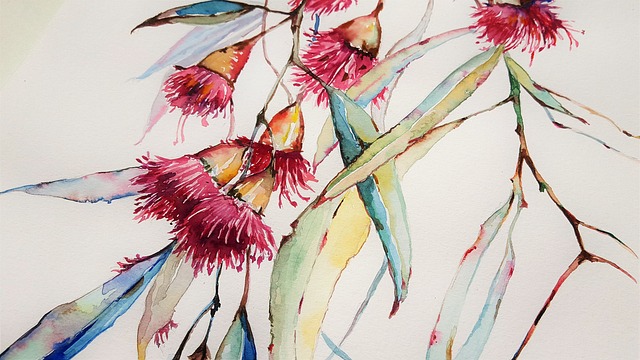
Welcome to the beginner’s guide to watercolor painting. Whether you’re an aspiring artist or just looking for a new hobby, watercolor painting is a positive and relaxing hobby and a beautiful and versatile medium that offers endless possibilities. However, with so many materials and techniques to choose from, it can be quite overwhelming for beginners. Not a problem, because this beginner’s guide to watercolor painting will give you all the basic information and tips you need to get started on your artistic journey. So let’s get started
This post contains affiliate links, meaning I get a small commission if you decide to make a purchase via those links.
Introducing Watercolor Painting
Welcome to the wonderful world of watercolor painting! In this introduction, we’ll be discussing the basics of what watercolor painting is, the supplies you’ll need to get started, and some simple techniques to try out.
Watercolor painting is a type of painting that uses thinned-out colors to create an image. Because watercolors are not as opaque as other types of paint, they require a different approach and technique.
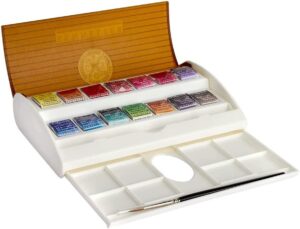
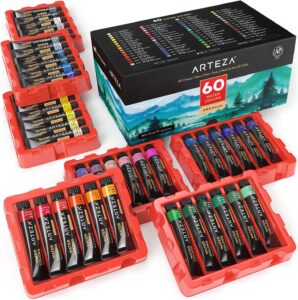 The first thing you’ll need for watercolor painting is a set of paints. Watercolors come in two forms: tubes and pans. Tubes of paint are more expensive but will last longer, while pans of paint are less expensive but won’t last as long. You’ll also need a brush or two, some water, and some paper. Watercolor paper is different from regular paper because it’s thicker and has a special coating that helps the colors flow evenly across the surface.
Once you have your supplies gathered, you’re ready to start painting! Here are a few simple techniques to get you started:
Wet-on-Wet: This technique involves applying wet paint onto a wet surface. This can create some beautiful (and sometimes unpredictable) effects as the colors blend together.
Dry-on-Wet: This technique is similar to wet-on-wet, but instead of applying wet paint to a wet surface, you apply it to a dry surface. This allows you more control over how
Tools and Materials Needed
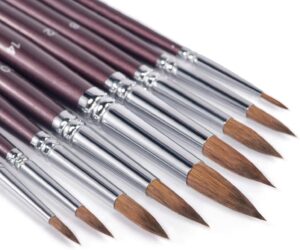
In order to get started with watercolor painting, you will need a few supplies. watercolors, a watercolor brush, watercolor paper, and a cup of clean water. You may also want to have a rag or sponge handy to blot excess paint from your brush, and a piece of cardboard or old newspaper to use as a palette.
As for the materials needed, it is best to use artist-grade watercolors as they are more pigment-packed and produce brighter colors. Student-grade watercolors will work in a pinch, but they may not give you the vibrance that you are looking for. For the brush, any size 6 or 8 round Kolinsky sable paintbrush will do nicely. If you do not have access to one of those, any synthetic fiber brush that is similar in size will suffice. When it comes to paper, look for something that is at least 140 lb (300 gsm). This type of paper has enough heft to it so that it will not buckle or warp when wet. And finally, make sure the cup of water is clean so that your colors do not get muddied.
Now that you have all the materials you need, let’s get started!
Color Mixing Basics
When it comes to mixing colors in watercolor painting, there are a few basic concepts that you need to understand. The first is that there are three primary colors – red, yellow, and blue – and that all other colors can be created by mixing these primaries together. For example, if you mix red and yellow together, you’ll create orange; if you mix red and blue together, you’ll create purple; and so on.
The second concept to understand is that of complementary colors. Complementary colors are those that sit opposite each other on the color wheel – so red and green are complementary, as are blue and orange, and yellow and purple. When mixed together, complementary colors will create a neutral brown or gray color.
It’s important to know a bit about color theory in order to mix colors effectively. This includes understanding things like value (lightness or darkness of a color), chroma (intensity of a color), and temperature (warm or cool tones). By taking all of these factors into account, you can mix just about any color you can imagine!
Basic Techniques of Watercolor Painting
The key to success with watercolors is understanding a few basic principles and techniques. Once you have a grasp on these basics, you’ll be amazed at the variety of stunning effects you can create with this versatile medium.
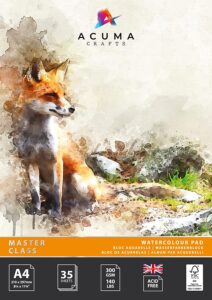
The first step in any watercolor painting is to choose the right paper. Watercolor paper is specially coated to resist warping when wet and to provide a smooth surface for your paintbrush. You’ll also need to invest in a good set of watercolors and brushes. When shopping for paints, look for those labeled “Artist Grade” or “Professional.” These higher-quality paints will produce richer colors and smoother brushstrokes than student-grade paints. As for brushes, sable or synthetic bristles are best; avoid natural-bristle brushes, which tend to shed their hairs into your paint.
Once you have your supplies, it’s time to get started! Begin by wetting your paper with clean water; this will help your colors flow evenly across the page. Then, start painting! Work from light to dark colors, adding details as you go. If you make a mistake, no problem! Simply wait for the area to dry completely and then paint over it with the color of your choice.
With these basic techniques in mind, you’re ready to start exploring the world of watercolor painting. Experiment with different brushstrokes and color combinations
Working with Different Shapes
When you’re first starting out with watercolor painting, it’s important to get a feel for the medium by working with different shapes. By experimenting with different shapes, you’ll begin to understand how watercolors behave on paper and how to control them.
One of the best ways to practice working with different shapes is to paint simple geometric shapes. Start by painting basic squares, triangles, and circles. As you become more comfortable with the medium, you can move on to more complex shapes.
Another great way to practice working with different shapes is to paint flowers or other plant life. Begin by painting simple flowers like daisies or tulips. Once you’ve mastered those, you can try painting more complex flowers like roses or sunflowers.
Don’t be afraid to experiment with other objects like houses, trees, or even animals. The possibilities are endless! Just remember to have fun and enjoy the process.
Blending and Layering
By using different techniques, you can create unique effects that add dimension and interest to your paintings. One of the simplest ways to blend colors is by lightly wetting one area of your paper and then applying another color on top. As the two colors mix together, they will naturally blend. You can also experiment with different brushstrokes to create different effects.
Layering colors is another great way to add depth and dimension to your paintings. To do this, start by applying a light layer of color. Once that dries, apply another layer of color on top, working in a darker shade. Keep adding layers until you achieve the desired effect.
Types of Paper
Watercolor paper comes in many different types, each with its own unique properties that will affect the way your paint behaves and dries. The three main types of watercolor paper are:
1. Cold press paper: This type of paper has a slightly textured surface that helps to give your paintings more dimensionality. It also takes longer for paint to dry on cold press paper, so you have more time to work with it before it dries out.
2. Hot press paper: This type of paper has a smooth surface that is ideal for creating detailed paintings. Paint dries quickly on hot press paper, so you need to work quickly or your paint will start to dry out before you’re finished working with it.
3. Rough press paper: This type of paper has a very textured surface that can be difficult to work with if
Finishing Touches
Finishing touches are just as important as the initial brushstrokes. By taking the time to add some final details, you can really
bring your painting to life. Here are a few tips on how to add those finishing touches:
1. Use a fine-tip brush for detailed work: When adding final details to your painting, use a fine-tip brush for precision. This will help you avoid making any mistakes that could ruin your whole painting.
2. Take your time: Don’t rush when adding those final details. This is the part of the painting where you really need to focus and be careful. If you’re not careful, you could easily make a mistake that cannot be fixed.
3. Add some highlights: One way to add some extra interest to your painting is by adding highlights. This can be done with white paint or by leaving some areas of the paper unpainted. Highlights will help make your painting pop and give it some extra dimension.
4. Experiment with different techniques: There’s no right or wrong way to add finishing touches to a watercolor painting. So, feel free to experiment with different techniques until you find something that works for you. You might even want to try out several different techniques on one painting to see what looks best.
Conclusion
Watercolor painting can be a great learning experience for beginners. There are so many different styles and techniques, making it an exciting hobby to try out. We hope that this guide has given you the basic knowledge of watercolor supplies and tips on how to get started with your own paintings. So why not dive in and have some fun? Keep experimenting, practice often and soon you will find yourself creating beautiful works of art!